Defined condition
If the name contains “invoice”, move the file to the invoice folder.
Intermediate level · applied theory
Technical ideas explained with balance: accessible enough to build intuition and precise enough to prepare method and architecture.
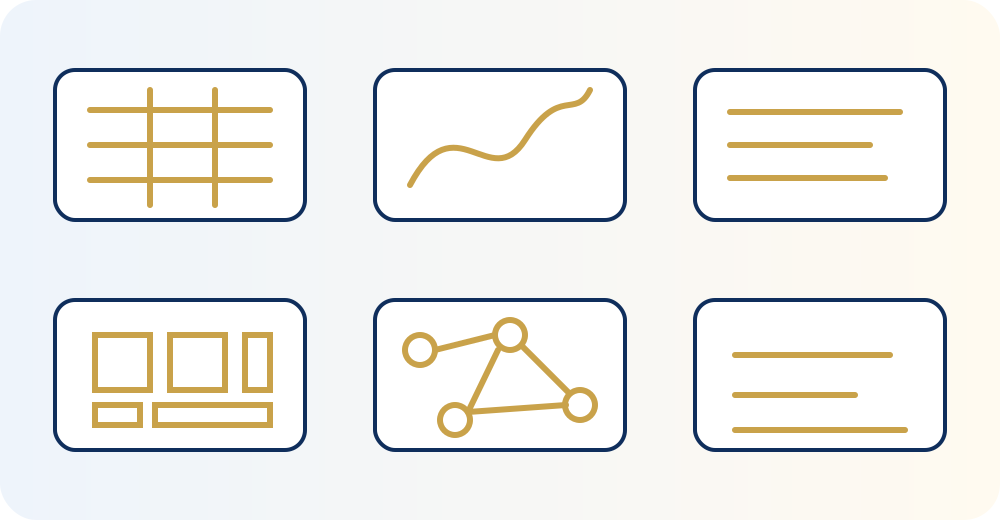
Progressive path
This intermediate level builds a bridge between intuition and implementation: a map for reading data, models, algorithms and automation without losing the thread.
The same problem, different tools
The tools can work together but answer different needs.
If the name contains “invoice”, move the file to the invoice folder.
Open the mailbox, save the attachment, rename it and update the register.
Classify the document from text and structure even when its name is unclear.
Prepare a content summary and an initial response subject to human review.
AI, ML and algorithms
Artificial intelligence is the broad field: it includes systems that classify, estimate, search or generate. Machine learning is the part of AI where a rule is learned from data. An algorithm is a defined sequence of steps and may be statistical, deterministic or learned.
The question comes before the tool: describing, forecasting, classifying, grouping, detecting anomalies or setting priorities call for different method families.
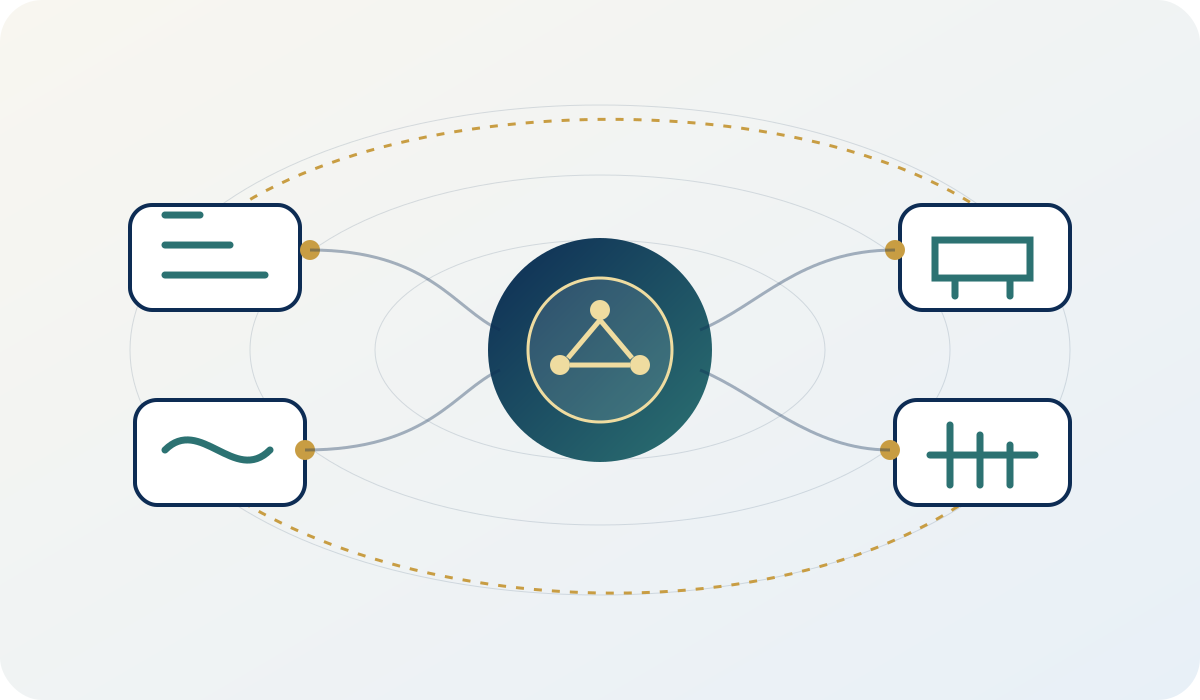
Data types
Rows, columns, categories and measures: prices, sensors, KPIs, compositions and accounts.
Values ordered in time. Rhythm, trend, seasonality, regime and change become central.
Reports, notices, articles and PDFs require parsing, retrieval, synthesis and source checks.
Pixels, satellite bands and coordinates describe shape, matter, temperature and space.
Nodes and relations represent value chains, dependencies, citations, flows or connections.
A sequence of discrete facts tells the story of triggers, exceptions, transitions and system state.
Methods and questions
The technical name follows the concrete question.
| Family | Plain question | Everyday or applied example |
|---|---|---|
| Rules | Is the condition true? | Flag an expired document. |
| Regression | What might the value be? | Estimate consumption. |
| Classification | Which category does it belong to? | Route a request. |
| Clustering | Which cases are similar? | Group behaviour profiles. |
| Anomaly detection | What is unusual? | Identify an abnormal sensor. |
| Time series | How does it change over time? | Estimate demand or temperature. |
| Neural networks | Which complex structure is present? | Recognise elements in images or text. |
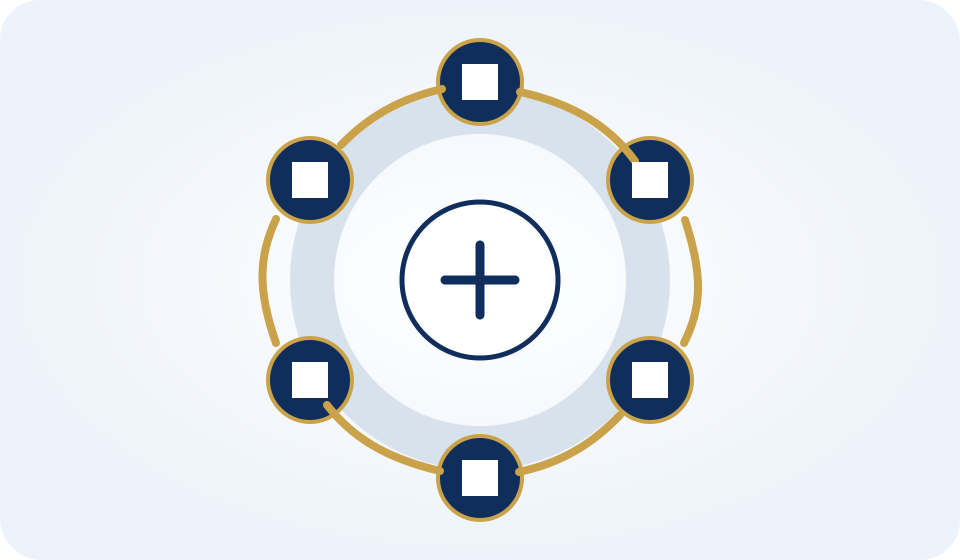
Machine-learning cycle
Data automation and RPA
Schedule, event, new file, updated API or manual command.
Retries, timeouts, source date, licences and provenance.
Schema, units, missing values, ranges and freshness.
Rules, statistics, ML, geospatial analysis or document composition.
Publish, skip, block, degrade or request review.
State, artifacts, logs, hashes and URIs make the route reconstructable.